Welcome book
Paper or digital welcome book: how to choose

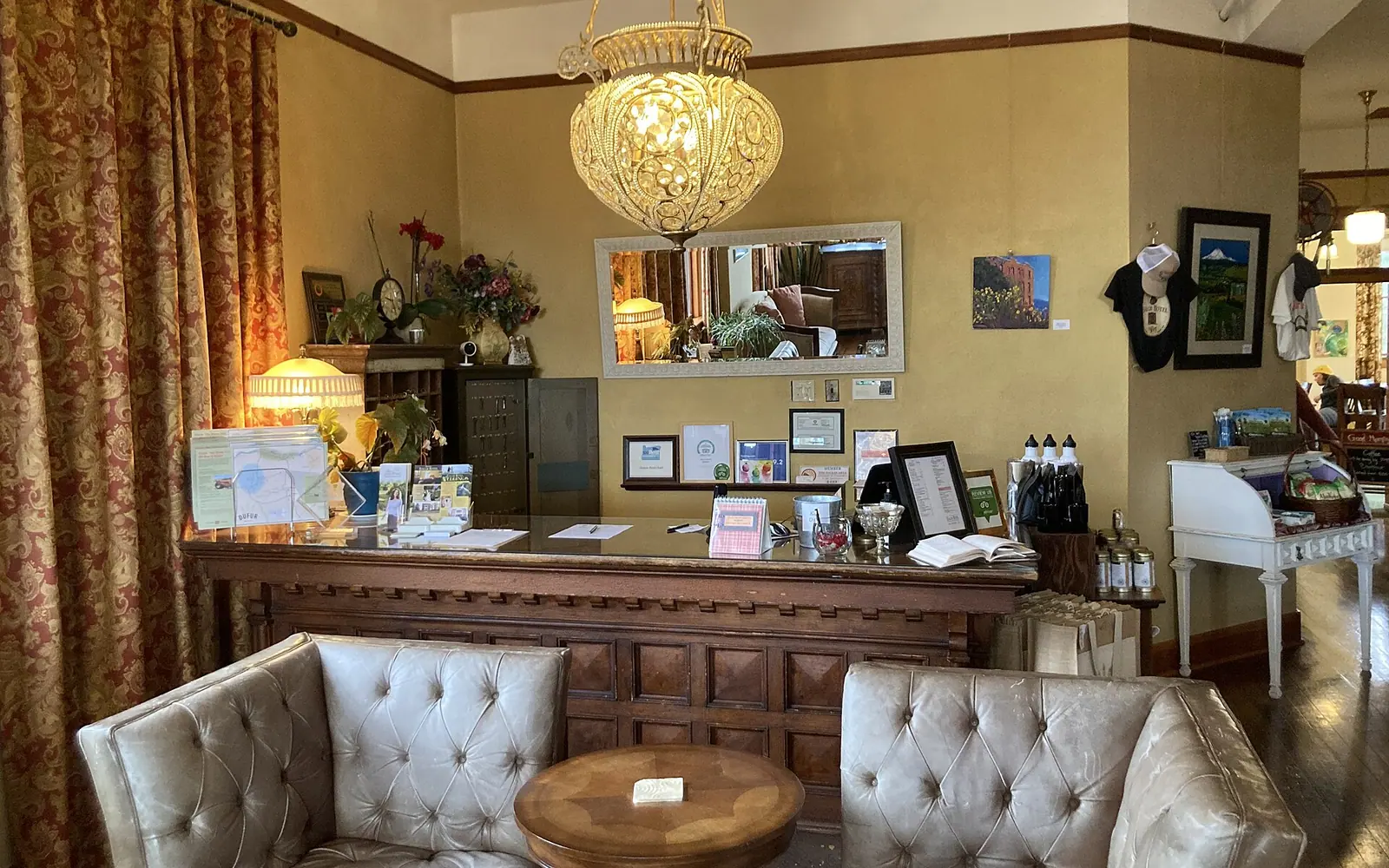
Photo: Mattsjc / Wikimedia Commons
Imagine a Friday evening in October, 9.30 pm. At a holiday cottage, a guest is looking for the Wi-Fi code. The paper welcome book is in the folder in the living room, but the page is two years old and the code has changed since. She phones the owner, who is having dinner with the family. The same evening, at another property, a guest with no signal stands in front of a QR code and cannot read anything.
No format is perfect. This guide compares the paper and digital welcome books on practical criteria, then shows how to choose for your type of property.
In brief
Short answer. Our recommendation for most properties: a mixed approach, with a one-page paper sheet for the essentials and a digital welcome book for everything else.
Digital wins on updates, languages and round-the-clock access.
Paper wins when there is no signal and for guests without a smartphone.
No general requirement for a welcome book, as far as we know. Mandatory notices (at campsites, for example) are a separate matter.
The criteria are how often your information changes, the number of units, languages and signal, not how modern the format is.
Paper or digital welcome book: the short answer
Choose digital if your information changes often or if you welcome international guests. Keep paper for the essentials. In most cases, the two formats complement each other.
The choice comes down to how often things change, your guests' languages and how reliable your signal is. Four questions at the end of the article help you decide.
Your property's rating may require certain content: check with the body that rates you or with your local authority.
Paper and digital side by side
Digital wins on updates and languages; paper wins when there is no signal and for guests without a smartphone. The table sums up the differences.
A digital welcome book is a practical guide that guests read on a smartphone, through a link or QR code, in the browser. A paper welcome book is a printed document, left in the accommodation or handed over on arrival.
Criterion | Paper welcome book | Digital welcome book |
|---|---|---|
Updates | Reprint and replace in every unit | One change, applied everywhere |
Languages | One printed version per language | Translation possible; proofread the essentials |
No signal | Readable anywhere | Depends on signal |
Guests without a smartphone | No obstacle | A real obstacle for a minority |
Wear and tear | Dog-eared, stained or lost pages | No physical wear |
Visibility on arrival | Noticed if left in plain view | Needs a well-placed QR code |
None of these rows decides on its own. Weigh them according to your property.
What paper does better
Paper stays readable with no signal and no battery. It has two strengths that digital cannot match.
It gets noticed. A welcome book left in plain view catches the eye. A QR code stuck too high or behind a door may never be scanned.
It needs no equipment. According to the Digital Barometer (Arcep and Crédoc, 2026), 91% of the population owns a smartphone. The survey dates from June 2025 and covers people aged 12 and over. A minority therefore does not own one. This figure relates to the population in France, not to international guests.
Mandatory notices are a separate matter. At campsites, the DGCCRF (the French consumer protection authority) states that the internal rules and prices including all taxes must be displayed at the entrance and at the reception (DGCCRF, campsite factsheet). The notice goes where it is required, whatever the format of your welcome book. For other types of property, ask your departmental consumer protection office (DDPP) or the DGCCRF.
Paper also has a clear weakness: it ages. A Wi-Fi code, the pool opening hours or an emergency number change, and the printed page stays wrong until the next print run.
What digital does better
A digital welcome book fixes an error everywhere with a single change, and it speaks the guest's language. That is its main advantage for a host short of time.
One update. You change the Wi-Fi code once. No folder to redo, no page to throw away.
Languages. In 2022, the Gîtes de France federation announced a digital welcome book in eight languages through automatic translation, rolled out across 56 departmental agencies (TourMaG, November 2022). The welcome book comes as a link or QR code, to open before or during the stay.
Access at any hour. The guest reads the information at 11 pm, when nobody is answering. On this point, see the guide to the hotel without a reception desk.
No app. A welcome book that opens in the browser avoids any download.
Its limits are just as clear. It depends on mobile signal or Wi-Fi. Automatic translation must be proofread for the information that matters (safety, access, rules). And a badly placed QR code is useless.
How much does updating cost?
Paper costs printing and replacement time; digital costs a subscription and a few minutes per change. An entirely fictional example illustrates the method: it is not a finding.
A 30-room hotel has a paper welcome book in every room. The Wi-Fi code, the breakfast hours and a phone number change three times a year. Each change means reprinting and replacing 30 copies. Assume €2 of printing per copy, 2 minutes of replacement time per room and working time valued at €20 an hour.
Printing: 3 changes × 30 copies × €2 = €180 a year.
Time: 3 × 30 × 2 minutes = 180 minutes, or 3 hours, or €60 a year.
Fictional total: €240 a year, with some rooms occasionally keeping the old version between two replacements.
This order of magnitude is modest for a small property. It grows with the number of units, buildings and languages: at 120 units, the total is four times higher.
On the digital side, assume a fictional subscription of €40 a month, or €480 a year, plus a few minutes of data entry per change. This amount is made up for the example and matches no real price.
On these assumptions, paper costs €8 per unit per year (240 ÷ 30). Digital becomes cheaper above roughly 60 units (480 ÷ 8), excluding data-entry time. For 30 rooms and 3 changes a year, paper is therefore cheaper; digital wins from 6 changes a year (480 ÷ €80 per change). In other cases, digital is justified by languages, round-the-clock availability and consistency across units.
Which format for your type of property?
The right format depends on the size of the property, its guests and its mandatory notices.
Hotel
Digital is most useful when the reception closes at night. Keep a dated paper card in the room, with the Wi-Fi network name, its code and the reception phone number.
Campsite
Mobile signal can be weak on a large site. The campsite management guide covers the demands of a campsite season. Keep paper for the internal rules and displayed prices, and a paper map at reception. The digital welcome book carries the rest: opening hours, activities, services, languages.
Holiday cottage and seasonal let
A code or a rule can change, and a holiday cottage sometimes hosts international guests. A paper sheet on the table and a digital welcome book sent before arrival are enough.
Holiday residence
With several buildings and reduced reception hours, digital avoids contradictions between units. The details are in the guide to the welcome book for a holiday residence.
Hostel and hotel group
An international clientele and the number of properties make the case for digital. Keep a common framework and let each site personalise its local information.
The mixed approach: how to do it
A one-page paper sheet with a QR code combines the strengths of both formats. It reassures the guest and points to the up-to-date detail.
Pick the essentials. Wi-Fi, access, reception hours, emergency number, departure rule: five lines.
Print a readable A5 sheet. One page, large type, placed where the guest sits.
Add the QR code and spell out the link. A guest without a camera can type the address.
Put the same link in your pre-arrival message. The guest reads it before arriving.
Review the sheet after every significant change. A one-page sheet is quick to reprint, and its update date stops guests relying on an outdated version.
A5 sheet template (example). Wi-Fi: network name and code, with the sheet's update date. Access: door codes and parking. Reception: hours and number to call. Emergencies: useful numbers and the nearest defibrillator. Departure: deadline and instructions. At the bottom: QR code and address of the digital welcome book.
Mistakes to avoid
Mistakes almost always come from choosing a format without considering how it will be used.
Going fully digital at a campsite without checking the signal on site.
Keeping a paper folder that nobody updates.
Printing information that changes often (codes, prices, hours) without an update date.
Trusting automatic translation without proofreading the safety instructions.
Believing that the welcome book, paper or digital, replaces a mandatory notice.
Putting the QR code where nobody sees it.
How to choose in four questions
These guidelines are indicative, not official thresholds.
Does your information change several times a year, or do you have many units? If so, favour digital.
Do a significant share of your guests not speak French? If so, digital makes the work easier.
Is your signal reliable on site? If not, strengthen the paper side.
Do you have mandatory notices? They stay where they are required, whatever your welcome book.
FAQ: paper or digital welcome book
Is a welcome book compulsory?
As far as we know, no general rule requires a welcome book; check with the body that rates you. Some notices remain mandatory depending on the property, for example at campsites. For displays, ask your departmental consumer protection office (DDPP) or the DGCCRF.
Can you keep both formats?
Yes, and it is often the most suitable approach. A one-page paper sheet gives the essentials; the digital welcome book gives the up-to-date detail. Both must show the same key information.
What if the guest has no signal?
Put the essentials on paper: Wi-Fi, access, emergency number. Also send the link to the welcome book before arrival, while the guest has a signal, so they can open it in advance. They can also take a screenshot of the key information.
Do guests really read the welcome book?
It depends on how visible and clear it is. A well-placed QR code and a link sent before arrival are worth testing. No reliable general data on reading rates was found: measure your own when your tool allows it.
How many languages should you offer?
Start with the languages of your most frequent guests, then proofread the safety and access information. Automatic translation helps, but it does not replace proofreading.
How Muvia can help
Muvia, which publishes this blog, offers a digital welcome book that guests open by QR code, in the browser, with no app or account. It can be customised (logo, colours, content) and places no limit on views. It does not replace your mandatory notices or your paper sheet. An AI assistant can also answer guests alongside the welcome book. The Muvia page for campsites explains how it works on a large site.
You can book a 15-minute demo or start the 7-day free trial, with no credit card and no commitment.
Sources
More articles
Discover more articles from Muvia Solutions

Properties
- HotelsTake the load off reception, day and night.
- CampsitesA welcome that holds up in peak season.
- Holiday residencesThe instructions for every apartment.
- HostelsAnswer every traveller in their own language.
- Holiday cottagesYour welcome book, even when you're away.
- Groups & chainsAll your properties in a single account.
Marketing, upselling & revenue
AI assistant & conversation
Digital welcome book
Resources
Worth reading