Campsite
Campsite management: the practical guide to running your season from A to Z

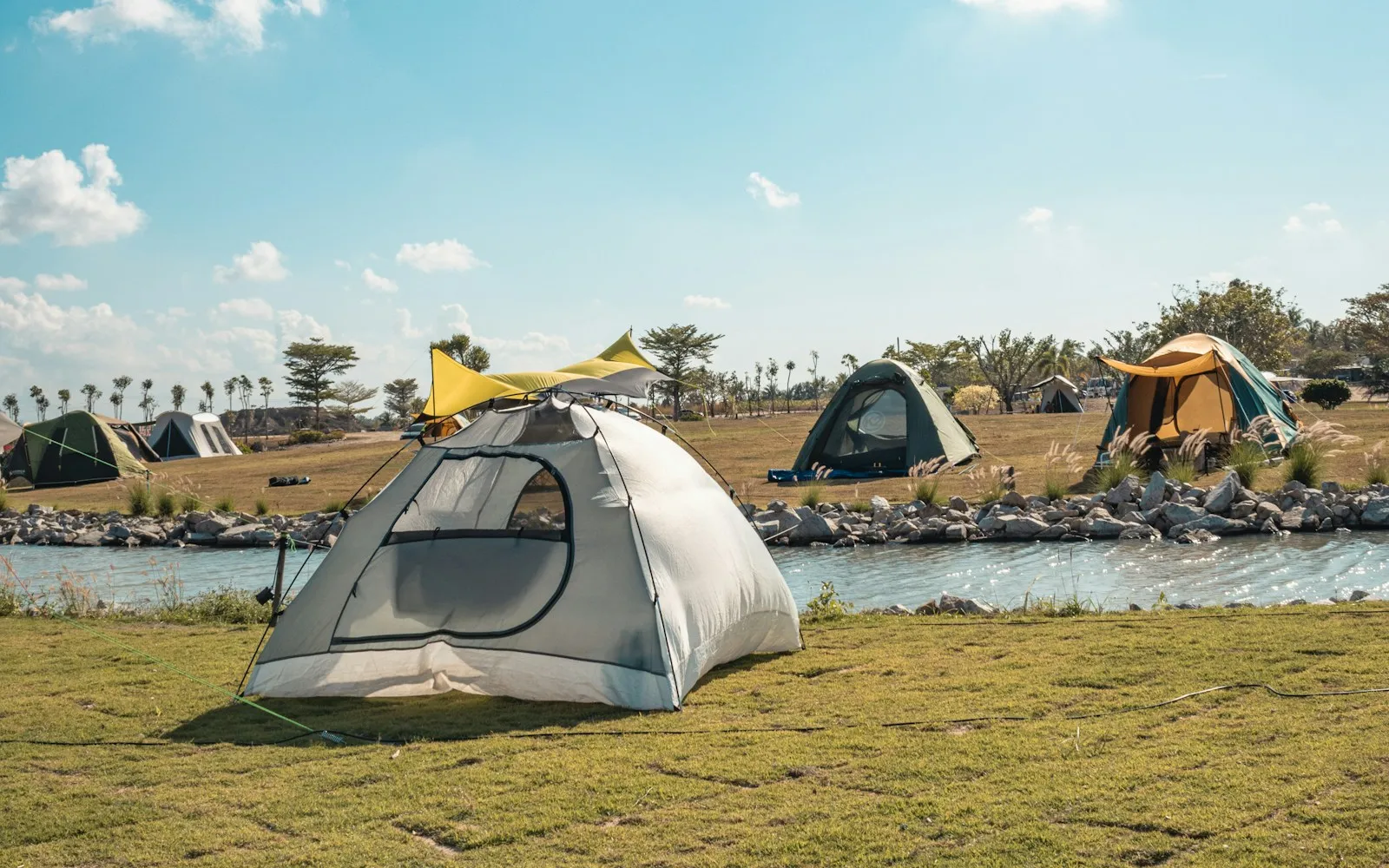
Photo: Pattanapong Tuamkhum / Unsplash
A campsite isn't run like a hotel. The season lasts a few weeks. Campers' questions all arrive at the same time. Seasonal staff start before they're properly trained. Inspections come at the worst moment. And meanwhile, you have to maintain, recruit, stay compliant, fill pitches and manage twelve months of cash flow on two months of revenue.
That's the reality of campsite management: a job where everything is concentrated into a handful of weeks, while the decisions are made during the other ten months.
This guide covers the areas that make the difference, using France as the example: the French market and its 2025 figures, seasonality, the 1 to 5-star classification, the operator's regulatory obligations, the welcome in peak season, seasonal recruitment, the guest experience and reviews.
In brief
The market. 6,678 campsites and 639,700 pitches in France in 2025, of which 5,074 are classified and 1,604 unclassified (INSEE).
Occupancy. An occupancy rate of 43.5% in 2025, for 147.6 million overnight stays: the capacity exists, but it isn't filled all year round.
Concentration. A quarter of campsite overnight stays happen in July-August, and July-August 2025 accounted for 57% of the summer season's overnight stays (INSEE).
Classification. Voluntary, from 1 to 5 stars, governed by the order of 6 July 2010, managed by Atout France, reassessed every 5 years after an inspection by a COFRAC-accredited body.
Obligations. Development permit above 20 people or 6 units, safety notice handed over on arrival, hygiene, pre-contractual information (order of 22 October 2008) and site rules.
The welcome. In peak season, the vast majority of questions asked at reception are the same, every day.
The reflex. Check every obligation with your town hall, your prefecture (DDT) and the relevant bodies: the rules depend on the site, the municipality and the classification.
The campsite market in France: the 2025 figures
Let's start with the landscape. France has 6,678 campsites and 639,700 pitches in 2025, according to INSEE. Of these, 5,074 are classified and 1,604 are not. So classification is the norm in France, not the exception.
2025 indicator | Value | Source |
|---|---|---|
Number of campsites | 6 678 | INSEE |
Number of pitches | 639 700 | INSEE |
Classified campsites | 5 074 | INSEE |
Unclassified campsites | 1 604 | INSEE |
Occupancy rate | 43.5% | INSEE |
Overnight stays | 147.6 million | INSEE |
Share of summer tourist accommodation occupancy | 63% | INSEE |
Two figures are worth pausing on. The first: an occupancy rate of 43.5% over the year, for 147.6 million overnight stays. In other words: more than half your capacity stays empty over twelve months. The second: campsites account for 63% of tourist accommodation occupancy in the 2025 summer season (INSEE). Camping isn't a niche market in France. It's the leading accommodation provider in summer.
What this changes in how you run things
Your opponent isn't the competition, it's empty pitches. The point isn't to add pitches, but to fill and sell what you have better: off season, short stays, local events, nearby guests.
Every night counts. With low average occupancy, every direct booking won, every extra service sold and every additional night in the shoulder season improves the margin.
Classification makes you visible or invisible. With 5,074 classified campsites, not being classified becomes a handicap on platforms, search engines and in tourist offices.
You're your own sales force. Many independent campsites have neither a marketing department nor a full-time revenue manager: campsite management also means wearing those hats.
Extreme seasonality: a quarter of overnight stays in July-August
What if your whole year were decided in eight weeks? It almost is.
A quarter of campsite overnight stays happen in July and August (INSEE). And over the summer season (May-August), July-August 2025 accounted for 57% of overnight stays (INSEE).
In other words: you spend ten months preparing what's consumed in two. And your organisational mistakes are paid for immediately, at the moment you no longer have a minute to correct them.
What the concentration demands
Cash flow. Costs come in every month. Revenue doesn't. The cash flow plan is built in advance, not in June.
Staff. You have to recruit, train and run a team over a very short peak, with volumes that vary from one week to the next.
Quality. Clean toilet blocks, safety, the pool, entertainment: everything is judged at the same time, by all the guests at once.
Mental energy. A campsite manager goes from maintenance to guest relations, then to recruitment, then to inspections, all in the same day.
The real calendar of a campsite year
Period | What's at stake | Your management priority |
|---|---|---|
November to February | Off season | Works, major maintenance, budget, renewing the accommodation stock, classification file |
March to April | Pre-opening | Recruitment, training, compliance, rates, opening bookings |
May to June | Ramp-up | Teams finding their feet, entertainment, testing your tools, rate adjustments |
July to August | Peak season | Intensive welcome, cleanliness, safety, handling the unexpected, guest reviews |
September to October | End of season | Reviews of the season, replies to guest reviews, end-of-season interviews, preparing the next one |
The right question isn't "how do I survive July?". It's "what can I decide in February to make July easier?".
1 to 5-star classification: voluntary, but strategic
In France, campsite classification is voluntary. It ranges from 1 to 5 stars and is based on the standards set by the order of 6 July 2010 on the classification standards for campsites. It's managed by Atout France and reassessed every 5 years. Before it's awarded, there's an inspection carried out by a COFRAC-accredited body (Atout France - the classification process).
The criteria are grouped into families: facilities and amenities, guest services, accessibility, sustainability. To prepare or renew your classification, Atout France's inspection guide remains your reference document.
What classification changes in practice
Lever | Effect on your operation |
|---|---|
Visibility | Better listing on platforms, search engines and in tourist office materials |
Pricing | Moving upmarket and charging more are justified by stars that have been verified, not by promises |
Financing and insurance | Banks and insurers look at classification in an operating file |
Trust | Campers compare stars, rarely brochures |
The classic trap? Getting classified once, then forgetting the criteria for five years. Prepare for the visit: keep an up-to-date file, keep proof of maintenance, go through the inspection guide criterion by criterion. A classification is lost on details.
The operator's regulatory obligations
Creating, extending or running a campsite is a regulated activity. And the rules don't just exist: they're inspected.
Check before any decision. Planning, safety, hygiene and classification rules depend on your municipality, your site, your classification and your activity. Always have your situation confirmed by your town hall, your prefecture (DDT) and the relevant services. This guide is for information only and doesn't replace official advice.
Creating, extending, transforming: the development permit
Above 20 people accommodated or 6 units (pitches, light dwellings, mobile homes), a development permit is required (Bpifrance Création - campsites). It's the starting point of any project: before buying mobile homes or redoing the networks, check what your land allows. The general framework is set out by the French Ministry of the Economy in its fact sheet on developed campsites and residential leisure parks.
Safety: the notice handed over on arrival
The operator gives the camper, on arrival, a safety notice, and displays the instructions on site. It explains what to do in case of fire, where the assembly points are, how to evacuate. It's your first legal protection and, above all, your guests' first protection.
Hygiene: water, toilet blocks, waste water, rubbish
Running water, clean and well-maintained toilet blocks, waste water treatment, rubbish collection: hygiene obligations are part of everyday life. The French Ministry for Ecological Transition's campsite hygiene and safety guide details what's expected. In peak season, these obligations aren't dealt with "when there's time": they're planned with dedicated slots and named people.
Pre-contractual information: what the guest must know before paying
Before the contract is concluded, the operator renting accommodation in an outdoor hospitality business must give the consumer, in writing, the information set out in the order of 22 October 2008. This includes in particular:
the campsite's administrative details;
a description of the accommodation;
its location;
the facilities and services included, or charged as extras;
the price of the rental and additional services;
the rental conditions.
Put another way: what you show on your website commits your business. The rules to know as set out by the DGCCRF (France's consumer protection authority) point in the same direction.
Site rules: displayed, handed over, applied
A campsite must have site rules that follow a standard model, displayed at the site entrance and at reception, and an information notice for pitches rented by the year. Service-Public sets out the display and availability obligations for classified campsites.
Checklist: your obligations at a glance
Obligation | In practice | Check with |
|---|---|---|
Development permit | Above 20 people or 6 units: application before works | Town hall planning department, DDT |
Safety notice | Handed to each camper on arrival + displayed | SDIS (fire service), safety commission |
Hygiene and sanitation | Water, toilet blocks, waste water, rubbish | ARS (regional health agency), municipal services |
Pre-contractual information | Written document before the contract is concluded | DGCCRF, legal advice |
Site rules | Standard model displayed at the entrance and at reception | Prefecture, town hall |
Peak-season welcome: the wall of repetitive questions
What if you never had to answer the same question again? In July, reception becomes a one-stop shop: bookings, arrivals, departures, complaints, breakdowns, passing tourists. And in the middle of it all, the same litany.
"What's the Wi-Fi code?"
"What time can we arrive? Can we arrive at 10 pm?"
"Where are the bins, the recycling, the launderette?"
"Does the mobile home have a barbecue? Sun loungers?"
"Are pets allowed? Is there a mini-market? A restaurant?"
"Can we stay one more night on Saturday?"
"Until what time can we get bread?"
Each question takes thirty seconds. Multiplied by a hundred campers a day, that's one full-time person spending their summer repeating the same answers. And while they're talking, the queue grows, Saturday arrivals overflow, and the real emergencies wait.
The 3 sources of time to tap into
The FAQ on your website. Ten questions, ten short, honest answers. The ones your guests really ask, not the ones you'd like them to ask.
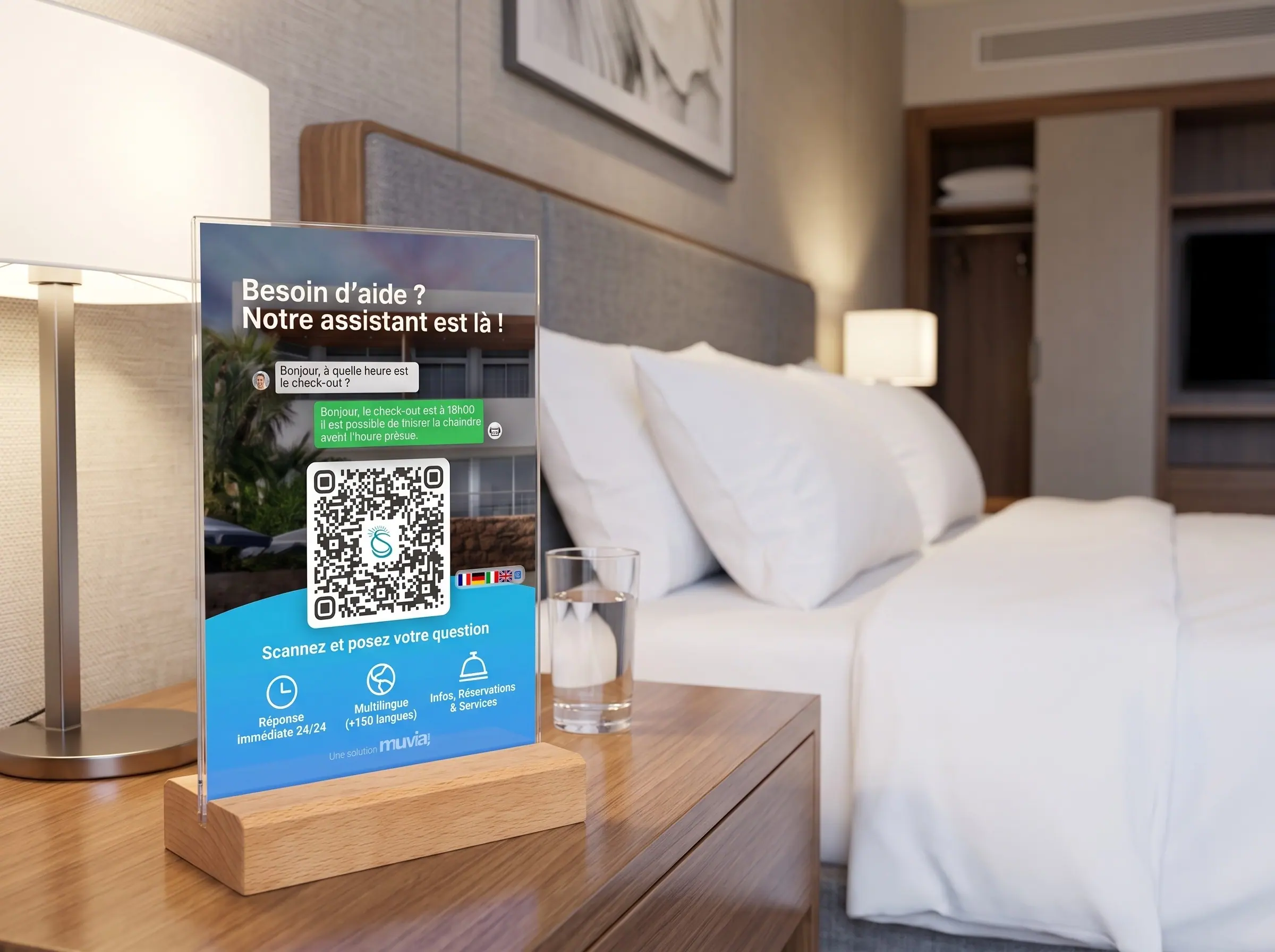
Physical signage. Opening hours, Wi-Fi code, launderette, recycling, pool, entertainment: displayed in the right place, a piece of information only needs to be given once.
Automatic answers on your website. An assistant available 24/7 absorbs the repetitive questions and leaves your teams free for what matters: the human side and complex problems.
What should never be automated
A dispute. A complaint. A request for a goodwill gesture. A technical or safety emergency. On these subjects, a human takes over immediately. A good system always provides for a handover to reception.
Seasonal recruitment: recruit early, train quickly, retain for longer
The question isn't "where can I find staff?" but "how do I avoid losing two weeks training them in July?".
Recruit early, and clearly
Write a precise job ad: exact dates, hours, span of the working day, accommodation if any, the actual tasks.
Start before bookings open, not in June. The best candidates go first.
Get back in touch with last year's seasonal staff first. A returner saves you two weeks of training.
Train quickly, but properly
A one-day onboarding is worth more than a month of improvisation: tour of the site, welcome procedures, safety instructions, hygiene rules, tools, who calls whom if there's a problem. Then a five-minute briefing every morning before opening.
The rota is a calculation, not a negotiation
Anticipate the peaks by day and by area (reception, mobile home cleaning, toilet blocks, entertainment), then plan accordingly. Keep an eye on working time: in French outdoor hospitality, additional hours for part-timers and overtime don't follow the same rules or the same pay increases (URSSAF). The seasonal contract has its own rules: put it in writing from day one.
Retention is about management, not budget
Give people responsibilities, explain what happens after the season, and really thank them. A seasonal worker who comes back for three summers knows your campsite better than any procedures manual.
Guest experience and reviews: it all comes down to a few key moments
A guest doesn't write a review continuously. They write it at three or four moments.
Moment | What the camper judges | Your lever |
|---|---|---|
Booking | Clarity of information, price, response time | Honest accommodation descriptions, FAQ, quick replies |
Arrival | Waiting time, welcome, cleanliness, first impression | Reinforced team at peak times, spotless accommodation |
Stay | Toilet blocks, pool, entertainment, responsiveness | Regular rounds, a clear channel for reporting a problem |
Departure | Billing, simplicity, quality of the last contact | Quick check-out, a personal word |
Reply to reviews, quickly and publicly
Reply to everything, including negative reviews, within a few days. A negative review handled well becomes a sign of professionalism for future readers. A negative review left unanswered becomes the last impression you leave.
Measure what matters
Don't just look at the average rating. List the repetitions: the same remark three times in a season isn't an opinion, it's a malfunction. Fix it in September, not the following July.
Automating guest relations: the last lever
Let's recap. You can't extend the season. You can't stack up teams. But you can win back time, and that's often where the quickest gain lies.
The most obvious source remains your own website. Visitors arrive there at 10 pm, on a Sunday, in English, Dutch or German. Reception is closed. They ask a simple question. Without an immediate answer, some of them go and book elsewhere.
Muvia addresses exactly this problem. It's an AI chatbot designed for hotels and campsites, built only into your property's website. Not on WhatsApp, not on Instagram, not on Messenger: your visitors ask their questions where they book. The assistant answers 24/7, in their language, and promotes your extra services along the way - pool, entertainment, bike hire, mini-market, restaurant. As soon as a request goes beyond its scope, the conversation is handed over to your team. And no commission is taken on your bookings.
See how effective it is: free trial, no commitment.
Frequently asked questions
Is 1 to 5-star classification compulsory for a campsite?
No. Classification is voluntary in France. But with 5,074 classified campsites out of the 6,678 recorded by INSEE, not being classified means giving up visibility on platforms and with tourism partners. And a classification takes preparation: facilities, services, accessibility, sustainability.
When is a development permit required?
Above 20 people accommodated or 6 units, a development permit is required (Bpifrance Création). Before installing light dwellings or increasing capacity, have your project approved by your municipality's planning department.
How long does a campsite classification last?
The classification is reassessed every 5 years, after an inspection by a COFRAC-accredited body (Atout France). Between two visits, the criteria change: reread the inspection guide well before the deadline.
What information must be given to the guest before booking?
The order of 22 October 2008 requires prior written information: administrative details, description and location of the accommodation, facilities and services included or charged as extras, price, rental conditions. What appears on your website commits your business.
How can you reduce repetitive questions at reception in peak season?
Three levers, in this order: an honest FAQ on your website, physical signage placed in the right spots, and automatic answers on your website for the questions that come up every day. Disputes, complaints and emergencies are still handled by a human.
Sources
INSEE - Tourist accommodation establishments and capacity (campsites)
Atout France - Campsite classification
Atout France - The classification process (inspection by a COFRAC-accredited body)
Légifrance - Order of 6 July 2010 on the classification standards for campsites
Légifrance - Order of 22 October 2008 on prior consumer information in outdoor hospitality
Bpifrance Création - Regulated activity: campsites (development permit, pre-contractual information)
French Ministry of the Economy - Developed campsites and residential leisure parks
French Ministry for Ecological Transition - Campsite hygiene and safety (guide)
DGCCRF - Campsites: the rules to know
Service-Public - Campsites: the operator's obligations
URSSAF - Reduced employee contributions (additional hours and overtime)
Disclaimer. This guide is for information only and is based on French regulations. Planning, safety, hygiene, classification and employment rules depend on your site, your municipality and your activity. Always check your situation with your town hall, your prefecture (DDT), the ARS and the relevant bodies before any decision.
More articles
Discover more articles from Muvia Solutions


Properties
- HotelsTake the load off reception, day and night.
- CampsitesA welcome that holds up in peak season.
- Holiday residencesThe instructions for every apartment.
- HostelsAnswer every traveller in their own language.
- Holiday cottagesYour welcome book, even when you're away.
- Groups & chainsAll your properties in a single account.
Marketing, upselling & revenue
AI assistant & conversation
Digital welcome book
Resources