Welcome book
Holiday residence welcome book: a how-to guide

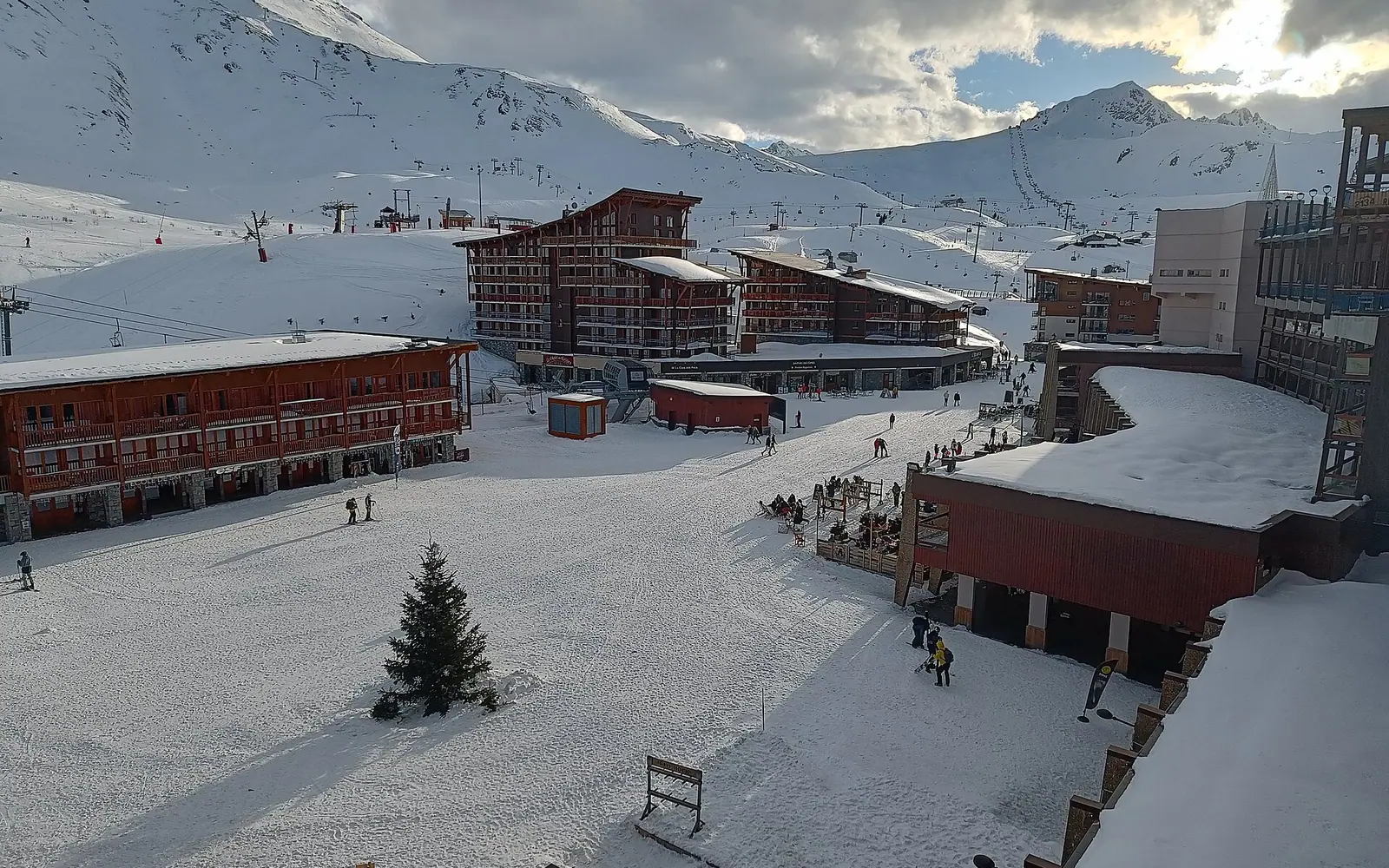
Photo: Hoolen / Wikimedia Commons
Picture a typical arrival. It is 10:10 pm on a Sunday in November. A Dutch family arrives outside building B. The reception closed at 7 pm. The door code is in an email nobody can find, and the parking space they were given has not existed since the building work. The welcome book stuck up in the entrance dates from 2022.
None of this is rare when there are several buildings, apartments with different owners and reduced reception hours. In those conditions, the welcome book has to answer when no one else can. This guide explains what it contains, how to keep it up to date and how to offer it to foreign guests.
In brief
Role. The welcome book is the residence's second reception: it answers questions about arrival, stay and departure when the reception is closed.
Content. Separate what applies to the whole residence (access, rules, services) from what is specific to the apartment (equipment, instructions).
Obligation. The official page we consulted mentions no requirement to provide a welcome book. Check with the body that classifies your residence and with Atout France.
Updates. A named person in charge, four rhythms (before the season, every week, after every incident, every year) and a pre-season checklist.
Languages. Translate first what matters on the night of arrival: access, safety, rules, useful numbers.
What is a welcome book in a holiday residence?
A holiday residence welcome book is the document that brings together all the practical information a guest needs during their stay, on paper or on their phone. It does not replace the stay contract, the general terms or the reception.
A holiday residence (résidence de tourisme) is, under article D. 321-1 of the French Tourism Code, "a classified commercial accommodation establishment, operated on a permanent or seasonal basis" (entreprises.gouv.fr, 2024). According to the same page, classification is voluntary, with five categories, and is valid for five years. The same site gives, as examples of services, room cleaning, bed and bath linen, catering and reception.
Is the welcome book compulsory for holiday residences?
The official page on holiday residences cited above mentions no compulsory welcome book. It does not detail the classification criteria: ask the body that carries out your classification visit, and Atout France, whether information for guests is required.
What to put in the welcome book: what is shared and what is specific to the apartment
File each piece of information by level. What applies to the whole residence is written once. What depends on the apartment is filled in separately, otherwise guests read instructions that do not match their apartment.
Section | What the guest should find there | Level |
|---|---|---|
Arrival | Key collection times, out-of-hours procedure, how to get the code or the key, number to call | Residence |
Access and parking | Map, car park, buildings, lifts, access for people with reduced mobility | Residence |
Wi-Fi | Network, password, any limits | Residence or apartment |
Equipment | Heating, hob, dishwasher, television, shutters | Apartment |
Linen and cleaning | What is provided, what is optional, the end-of-stay clean | Residence |
House rules | Noise, smoking, pets, swimming pool, waste sorting | Residence |
Services | Reception, laundry, restaurant, equipment hire, opening hours | Residence |
Safety | Evacuation and fire instructions, pool and balcony rules, on-call number | Residence |
Emergencies | Emergency numbers, doctor, pharmacy, what to do in case of a breakdown | Residence |
Departure | Time, condition of the apartment, keys, waste | Residence |
Local area | Shops, activities, transport | Residence |
When the apartments belong to different owners, appoint one person to collect their information, using a standard apartment sheet. The sheet fits on five lines: type of apartment, particular equipment, appliances that need explaining, the owner's instructions and the date of the last check. Review it before each season.
Two sections are easy to forget. The first is the tourist tax: explain what is charged and why, using our guide to the tourist tax. The second is the request for a review at the end of the stay, in a single link.
For arrival and departure times, write your residence's own rule without presenting it as a general rule: it depends on your contract and how you operate.
Reception closed: the welcome book as a second reception
When the reception is closed, the welcome book becomes the guest's only point of contact. If your reception closes early or reduces its hours out of season, plan for late arrivals.
So write the late-arrival procedure as a numbered sequence of steps, with the on-call number first. Put it at the front of the welcome book, not on page 12. The same principles apply to hotels without a reception: our article on welcoming guests without a front desk covers self-arrival step by step.
Here is a model procedure to adapt to your residence:
1. The on-call number to ring first, with the time until which it is answered.
2. Where and how the guest gets their access code (pre-stay message, on-call), without writing the code itself in a displayed or shared document.
3. Building, floor and apartment number, with a map.
4. Parking space or authorised car park.
5. What to do if the code does not work.
Updating the welcome book: who, when, what
An up-to-date welcome book is one that someone is responsible for. Name a person (manager, operations lead, a designated receptionist) and give them a routine. Without that, the information goes out of date unnoticed, as in the scenario above.
Frequency | What to check |
|---|---|
Before the season | Reception and service hours, prices of extras, building work, maps, rules, numbers, links |
Every week in season | Activities, exceptional opening hours, swimming pool, local weather, information about the surroundings |
After every incident | Lift breakdown, building work, closed access, change of code, new instruction |
Every year | Full review, using the questions guests asked during the season |
Before the season, go through this checklist:
1. reread each section of the content table;
2. check reception and service hours;
3. test the links, the Wi-Fi password and the numbers;
4. update the maps, building work and rules;
5. have the languages you offer proofread.
A good source of updates is the reception itself: every question asked several times is a piece of information missing from the welcome book. Note them in a notebook or a shared spreadsheet.
Paper or digital?
A paper welcome book is reprinted and slipped into every apartment: each change means redoing everything. A digital welcome book is read on the guest's phone and corrected in one place.
The two can coexist: a paper notice for the essentials (access, emergencies) and the digital version for the rest. To choose, compare how often things change, the number of apartments and the share of foreign guests. If your information changes often and you manage many apartments, favour digital.
Offering the welcome book in several languages
Start with the languages of your actual guests, not a theoretical list. Look at the nationalities in last year's bookings: the number of useful languages depends on your bookings.
Insee, the French national statistics institute, reports 16.1 million nights by foreign guests in holiday residences in mainland France in 2025. That is about 22% of the 71.9 million nights (calculated from Insee's figures). This share is a national average: it varies widely by destination and season, and some of these guests read French (Belgians, Swiss, Canadians).
Translate first what matters on the night of arrival:
1. access to the building and the apartment;
2. emergency and on-call numbers;
3. safety rules (fire, pool, balconies);
4. house rules and opening hours;
5. the rest: activities, restaurants, tips.
Have someone who is fluent in the language proofread the translations of anything involving safety or billing. Machine translation remains a starting point, whatever the tool: an error in a time, a safety instruction or an amount leads to a dispute.
Mistakes to avoid
One welcome book for every apartment. The instructions for a studio do not suit a three-room apartment.
Information with no check date. The guest cannot tell whether the time shown is still valid.
Documents that are too long. Short sections and a clickable contents list work better.
Dead links. Test every link before the season.
A welcome book with no one in charge. No one corrects it, so no one is at fault, and the document goes stale.
FAQ: the welcome book of a holiday residence
Is a welcome book compulsory in a holiday residence?
No obligation appears on the official page we consulted on holiday residences. Check with the body that classifies your residence and with Atout France.
What should a holiday residence welcome book contain?
Arrival and departure, access, Wi-Fi, the apartment's equipment, house rules, services, emergencies and the local area. The table in this guide shows what belongs to the residence and what belongs to the apartment.
How often should the welcome book be updated?
Before the season, every week in season, after every incident and once a year for a full review. The exact frequency depends on how quickly your information changes.
Which languages should it be offered in?
In the languages of your actual guests, which last year's bookings will let you identify. Insee counts about 22% of nights by foreign guests in holiday residences in mainland France in 2025, but your own share may be very different.
Does a digital welcome book replace the reception?
No. It answers practical questions at any hour, but it does not replace a human welcome, complaint handling or stay formalities.
How Muvia can help
This blog is published by the publisher of the tool presented here: this is what it does, and what it does not do. The digital welcome book opens through a QR code in the guest's browser, with no app and no account. You customise the logo, the colours and the content, including the practical information and services of your residence.
The AI assistant answers 24/7, in more than 40 languages depending on the guest's language, and information corrected in French applies in every language. Safety instructions and amounts should be proofread in the languages you speak, whatever the tool. You will find details for your type of property on the holiday residences page.
The tool does not replace your management software: no planning, no invoicing, no arrival management. The prices are online. You can book a 15-minute demo or try it free for 7 days, with no credit card and no commitment.
Sources
Photo: Hoolen, Arc 2000, Olympic Square seen from the residences, Wikimedia Commons, CC BY 4.0
More articles
Discover more articles from Muvia Solutions
Properties
- HotelsTake the load off reception, day and night.
- CampsitesA welcome that holds up in peak season.
- Holiday residencesThe instructions for every apartment.
- HostelsAnswer every traveller in their own language.
- Holiday cottagesYour welcome book, even when you're away.
- Groups & chainsAll your properties in a single account.
Marketing, upselling & revenue
AI assistant & conversation
Digital welcome book
Resources
Worth reading